Built to Last: How to Read Fabric Quality in Workwear Before You Buy
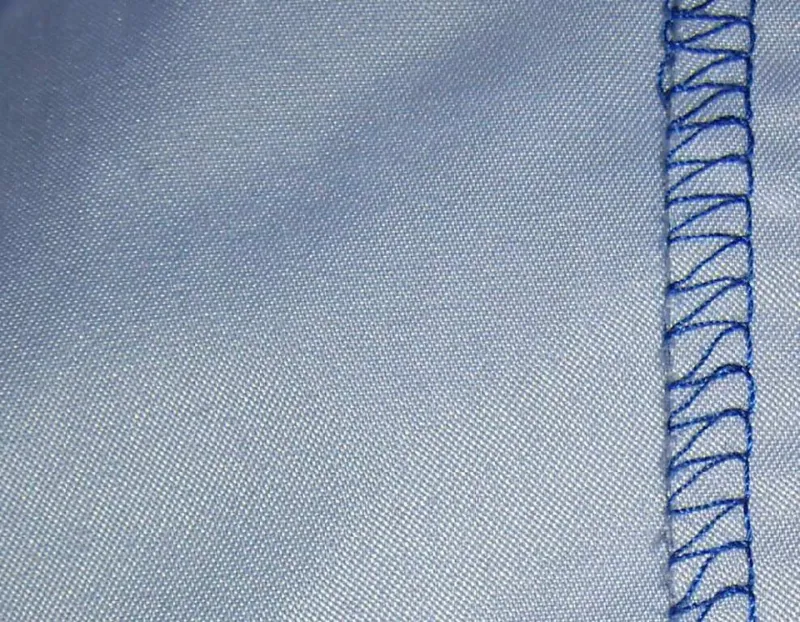
Photo: Damieng at en.wikipedia, CC BY-SA 3.0, via Wikimedia Commons
Why Fabric Specification Is a Business Decision, Not a Fashion One
When a healthcare administrator or restaurant manager purchases uniforms for their team, fabric quality is rarely the first consideration. Price, appearance, and availability tend to dominate the conversation. Yet the fabric specification of a garment — its fiber content, weave structure, weight, and finishing treatments — ultimately determines how that uniform performs under the specific pressures of a working environment.
A scrub top that degrades after 40 industrial washes costs far more over time than one rated for 100 wash cycles, even if its upfront price is lower. A server's apron that bleeds color onto a guest's clothing during a busy dinner service creates a brand problem that no amount of savings on the original purchase can offset. Understanding what makes workwear durable is not a technical exercise reserved for procurement specialists — it is a practical skill that any manager responsible for a uniform program should develop.
Decoding Fiber Content: The Foundation of Every Fabric
The fiber content label is the starting point for any quality evaluation. In the workwear market, three primary fiber categories dominate: natural fibers (primarily cotton), synthetic fibers (primarily polyester), and blended constructions that combine both.
Cotton offers breathability and comfort, qualities that matter greatly in physically demanding roles. However, 100 percent cotton garments are prone to shrinkage, wrinkling, and color degradation under the high-heat laundering protocols common in healthcare settings. They also absorb moisture readily, which can become a liability in food preparation environments where spills are frequent.
Polyester resists wrinkles, retains color through repeated washing, and dries quickly — all desirable properties in a workwear context. Its weakness is thermal comfort; polyester traps heat and can feel stifling during long shifts, particularly in kitchen environments or during warmer months.
Poly-cotton blends, typically formulated at ratios of 65/35 or 60/40 polyester to cotton, represent the most common solution in professional workwear because they balance the strengths of both fibers. A well-constructed 65/35 blend will offer meaningful wrinkle resistance and color retention while retaining enough cotton content to provide adequate breathability.
For healthcare applications specifically, performance blends incorporating spandex (typically 2 to 5 percent) have become increasingly standard. The addition of spandex introduces four-way stretch, which improves range of motion for clinical staff who are frequently bending, lifting, and moving between positions throughout a shift.
Fabric Weight: What the Numbers Actually Tell You
Fabric weight, measured in ounces per square yard (oz/yd²) in the US market, is one of the most reliable indicators of durability that appears in product specifications — and one of the most consistently overlooked.
As a general guide: lightweight fabrics (under 4 oz/yd²) are suited to warm-weather or low-abrasion applications but will not hold up under daily industrial laundering. Midweight fabrics (4 to 6 oz/yd²) represent the sweet spot for most service industry uniforms — substantial enough to resist wear and tear while remaining comfortable across a full shift. Heavyweight fabrics (above 6 oz/yd²) are appropriate for outerwear, chef coats, and roles involving significant physical contact with equipment or surfaces.
When a product description lists fabric weight, treat it as a baseline durability signal. A scrub pant listed at 4.5 oz/yd² in a poly-cotton blend will generally outlast a 3.2 oz/yd² option of similar construction, all else being equal.
Weave Structures and What They Mean for Workwear
Beyond fiber content and weight, the way a fabric is woven or knit significantly affects its performance characteristics. Two structures appear most frequently in professional workwear:
Twill weave produces a diagonal rib pattern visible on the fabric surface. It is inherently more durable than a plain weave of equivalent weight because the interlocking structure distributes stress across a greater surface area. Twill fabrics resist tearing and abrasion more effectively, making them a preferred choice for pants, chef coats, and utility garments. Denim is a familiar consumer example; in workwear, twill constructions in poly-cotton blends are the industry standard for bottom-weight garments.
Plain weave (also called a broadcloth or poplin construction) is simpler and less durable under abrasion but produces a smoother surface finish. It is commonly used in dress shirts, front-of-house service shirts, and lighter-duty tops where appearance takes precedence over ruggedness.
Jersey knit constructions — the basis of most modern scrub tops — offer stretch and comfort through their looped structure. The trade-off is that knit fabrics are more susceptible to pilling and snagging than woven alternatives. A higher-quality jersey fabric will use a tighter knit construction and a higher-quality yarn, both of which reduce pilling over time.
Fabric Treatments and Finishes: The Layer You Cannot See
Modern workwear fabrics frequently incorporate chemical or mechanical finishing treatments that enhance performance in specific environments. Understanding these treatments helps managers match uniform specifications to operational requirements.
Soil release finishes are applied to polyester-heavy blends to counteract the fiber's natural tendency to trap oil-based stains. For foodservice environments where cooking oils and sauces are occupational hazards, a soil release treatment can meaningfully extend the usable life of a garment by preventing stain set.
Antimicrobial treatments are increasingly standard in healthcare scrubs and are relevant wherever hygiene is a regulatory or professional concern. These treatments inhibit the growth of odor-causing bacteria within the fabric itself. It is worth noting that antimicrobial efficacy diminishes over wash cycles; product specifications should indicate the number of washes over which the treatment remains effective.
Moisture-wicking finishes are common in performance-oriented workwear, particularly for roles involving sustained physical exertion. These treatments draw perspiration away from the skin and toward the outer surface of the fabric where it can evaporate — a genuine comfort benefit in kitchen, clinical, or outdoor service environments.
How to Evaluate Quality When Reading Product Descriptions
When reviewing supplier specifications or product pages, look for the following as quality signals:
- Explicit fiber content percentages (not just "poly-cotton blend")
- Fabric weight listed in oz/yd²
- Weave or construction type identified
- Specific finishing treatments named and quantified where applicable
- Care instructions that align with your laundering protocols (industrial washing at high temperatures requires fabrics rated for that treatment)
Suppliers who cannot or will not provide these details are often working with lower-specification fabrics. Transparency in product documentation is itself a quality indicator.
At T&T Uniforms, we believe that informed buyers make better purchasing decisions — and that better purchasing decisions translate directly into longer-lasting uniforms, lower replacement costs, and a team that looks and feels the part through every shift. The fabric specifications we provide for each garment are not incidental details; they are the foundation of the value we deliver.