Smarter Cycles, Stronger Teams: A Manager's Playbook for Phased Uniform Replacement

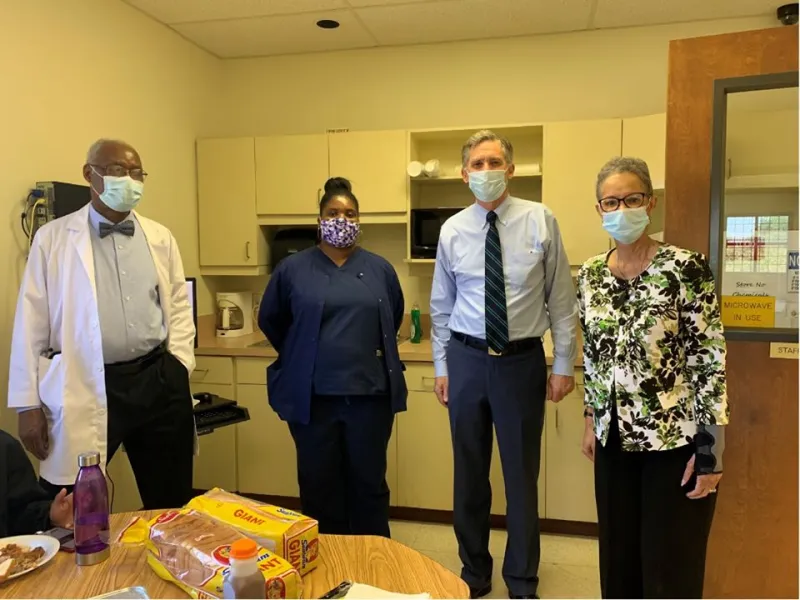
Photo: healthcare manager reviewing uniforms in hospital corridor, via thumbs.dreamstime.com
For most operations managers, the moment they notice a team member's uniform looking visibly worn is already too late. Frayed collars, faded logos, and fabric thinned from repeated industrial washing don't just reflect poorly on your organization — they signal to customers and patients alike that standards may be slipping. Yet replacing an entire team's workwear at once can strain even a well-planned budget.
The solution lies not in reactive purchasing, but in building a deliberate, phased uniform lifecycle strategy. Whether you manage a hospital floor, a hotel front desk, or a bustling restaurant kitchen, understanding when and how to refresh your team's apparel is one of the most practical investments you can make in your brand's daily presentation.
Understanding the Lifespan of Workwear by Industry
Not all uniforms age at the same rate. The demands placed on a registered nurse's scrubs differ enormously from those on a hotel concierge's blazer, and your replacement timeline should reflect that reality.
In healthcare settings, scrubs and clinical wear endure high-frequency laundering — often daily — along with exposure to disinfectants and biohazard materials. Industry standards generally suggest replacing healthcare uniforms every six to twelve months under heavy use. Fabrics treated for fluid resistance tend to degrade faster when washed with harsh hospital-grade detergents, so physical inspection should happen quarterly at minimum.
In hospitality and food service, uniforms face a different set of stressors: cooking oils, food stains, and the physical wear of long service shifts. Front-of-house apparel such as server aprons, host blazers, and bartender vests typically hold up for twelve to eighteen months with proper laundering protocols. Back-of-house items — chef coats and kitchen pants — often require replacement closer to every eight to twelve months due to heat and grease exposure.
For general service industries — retail associates, building services staff, and similar roles — a standard replacement window of eighteen to twenty-four months is reasonable, provided garments are laundered according to manufacturer guidelines and stored properly between shifts.
The Cost of Waiting Too Long
Delaying uniform replacement carries hidden costs that rarely appear on a single line item. When staff wear visibly degraded apparel, customer trust erodes. In healthcare especially, a worn or improperly maintained uniform can raise infection control concerns among patients and their families. In hospitality, a frayed uniform on a front-of-house employee undercuts the brand promise that your décor, menu, and service model work so hard to establish.
There is also a morale dimension. Employees who feel they look unprofessional are less likely to project confidence in their roles. The uniform is, in many ways, a daily signal from the employer about how much they value their team's presentation — and by extension, their team itself.
Building a Phased Replacement Calendar
Rather than replacing all uniforms simultaneously, a phased approach distributes costs across fiscal quarters while ensuring no department falls behind. Here is a practical framework to consider:
Year One — Audit and Baseline: Conduct a full inventory of current uniforms by department, noting the age, condition, and replacement urgency of each garment. Assign each item a priority tier: immediate replacement, replacement within six months, or replacement within twelve months.
Year One to Two — Tiered Rollout: Address immediate replacements first, focusing on customer-facing or patient-facing roles where presentation standards are highest. Schedule mid-priority replacements in the following quarter, coordinating with bulk order minimums to reduce per-unit costs.
Ongoing — Rolling Replacement: Once the initial backlog is cleared, implement a rolling schedule tied to each garment's expected lifespan. New hires receive fresh uniforms at onboarding, and existing team members receive replacements on a department-by-department cycle rather than all at once.
This model prevents the budget shock of a full fleet replacement while ensuring your team always presents at a professional standard.
Maximizing Value Through Bulk Ordering
One of the most effective ways to reduce the per-unit cost of uniform replacement is through strategic bulk purchasing. Most uniform suppliers — including T&T Uniforms — offer tiered pricing that rewards larger orders. If your phased schedule identifies three departments due for replacement within a six-month window, consolidating those orders into a single purchase can yield meaningful savings.
Consider also ordering a modest buffer stock — typically ten to fifteen percent above current headcount — to accommodate new hires, growth, and unexpected damage. Holding inventory reduces rush-order premiums and keeps your team looking consistent during high-turnover periods.
When placing bulk orders, standardize on core items across departments where possible. A shared base fabric or color palette allows you to redistribute inventory between departments as staffing levels shift, reducing waste.
Transitioning Without Disrupting Operations or Morale
A uniform changeover, handled poorly, can generate more confusion than it resolves. Staff may feel uncertain about when to switch, what to do with old garments, or whether the new uniforms signal broader organizational changes.
Clear internal communication is essential. Announce the transition well in advance, explain the reasoning — whether it is a brand refresh, a quality upgrade, or simply a scheduled replacement — and provide a definitive cutover date. Offering a brief overlap period, during which both old and new uniforms are acceptable, reduces anxiety and allows staff to transition as their new garments are distributed.
For organizations with a strong culture around team identity, consider involving staff in the selection process before finalizing new uniform styles. Even small input opportunities — a choice between two collar styles or a vote on a color accent — generate buy-in and turn a logistical exercise into a moment of team engagement.
A Long-Term Investment in Your Brand
The uniforms your team wears every shift are not merely functional garments. They are the most visible, most consistent expression of your organization's standards. A thoughtful replacement strategy — one grounded in realistic lifecycle data, phased budgeting, and clear communication — ensures that expression never fades.
At T&T Uniforms, we work with managers across healthcare, hospitality, and service industries to build ordering strategies that align with operational realities. Whether you are refreshing a five-person clinic or outfitting a two-hundred-seat restaurant, a planned approach to workwear replacement is always more cost-effective than waiting for the moment when the wear becomes impossible to ignore.