When Better Uniforms Backfire: Understanding the Hidden Turnover Risk in Workwear Upgrades
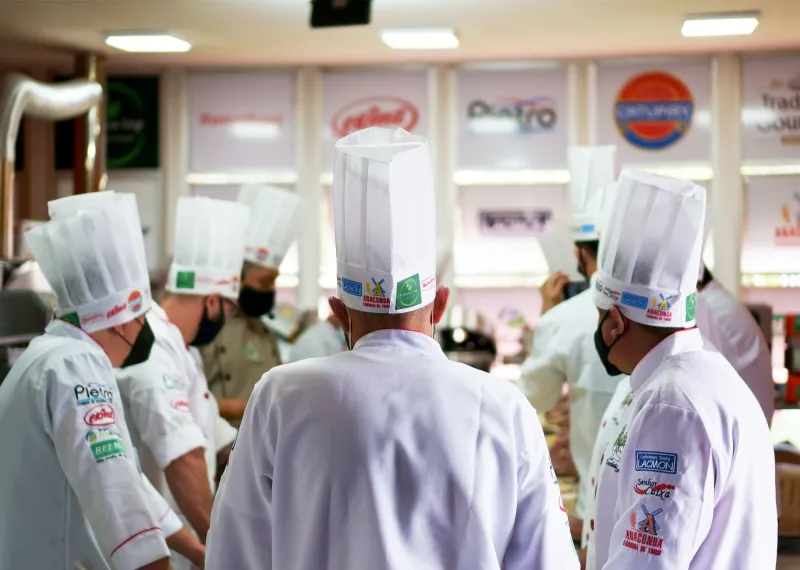
It seems like a straightforward equation: better uniforms equal a more professional appearance, higher employee morale, and a stronger brand impression. So why do some hospitality managers — after finally securing budget approval and selecting a polished new uniform program — find themselves fielding complaints, watching engagement dip, and, in the most frustrating cases, losing valued staff members?
This is not a rare occurrence. It is, in fact, a well-documented pattern that organizational psychologists and HR professionals have observed across service industries throughout the United States. The phenomenon has a name in some management circles: the uniform upgrade paradox. And understanding it may be one of the most important things a hospitality or service industry manager can do before pulling the trigger on a new workwear program.
The Psychology Behind the Resistance
Human beings are, by nature, creatures of habit. Workplace routines — including something as seemingly minor as what employees wear each day — become deeply embedded in personal identity and professional self-concept. For a server who has worn the same black apron and collared shirt for three years, that uniform is not just fabric. It is a symbol of tenure, familiarity, and belonging.
When management introduces a new uniform — even a demonstrably better one — it can inadvertently send a message that the previous standard was inadequate. Employees who took pride in their appearance under the old program may interpret the change as an implicit criticism. The subtext they absorb, whether intended or not, is: what you were doing before wasn't good enough.
This reaction is compounded when the rollout is handled without sufficient communication or employee input. A change imposed from above, with little explanation and no opportunity for staff feedback, triggers a sense of powerlessness. In industries already characterized by high turnover and demanding working conditions — hospitality chief among them — that sense of powerlessness can be the final straw for employees who were already weighing their options.
The Practical Grievances That Compound the Problem
Beyond the psychological dimension, uniform upgrades frequently introduce legitimate practical concerns that management may underestimate.
Fit and comfort disruption. Employees who have adapted to a particular cut, fabric weight, or style over time may find that new garments — regardless of their objective quality — feel unfamiliar or uncomfortable during long shifts. A server on their feet for eight hours is acutely sensitive to how their clothing moves, breathes, and holds up under physical demands. If the new uniform restricts movement or retains heat differently than the previous one, that discomfort is real and immediate.
Financial anxiety. In some operations, employees are expected to purchase their own uniforms or contribute to their cost. Even a partial financial burden, when introduced without adequate notice or subsidy, can generate resentment — particularly among hourly workers operating on tight personal budgets.
Identity and seniority signals. Many workplaces use subtle uniform distinctions — a different color apron, a specific pin, a variation in collar style — to denote experience levels or roles. A sweeping uniform overhaul can inadvertently erase those distinctions, leaving long-tenured employees feeling stripped of a hard-earned status marker.
Why Your Best People Leave First
Here is the counterintuitive core of the paradox: the employees most likely to exit following a poorly managed uniform upgrade are often your highest performers. The reason is straightforward. Your most engaged staff members are also the most invested in the culture and identity of your operation. They have built their professional self-image around their role in your organization. A change that feels disrespectful of that investment hits them harder than it hits newer or more disengaged employees.
Furthermore, your top performers typically have options. In a competitive labor market — and the US hospitality sector has experienced sustained staffing challenges in recent years — skilled servers, front desk professionals, and experienced kitchen staff rarely struggle to find alternative positions. If a uniform change signals to them that management is out of touch with the day-to-day realities of the job, they may begin evaluating those alternatives more seriously.
A Strategic Roadmap for Rollouts That Build Momentum
None of this means that uniform upgrades should be avoided or indefinitely delayed. Quite the opposite — a well-executed upgrade can meaningfully elevate team morale, reinforce brand identity, and attract new talent. The key lies in the process, not the product.
Start with a listening phase. Before finalizing any new uniform selection, convene a small advisory group of frontline employees representing different roles, shift types, and tenure levels. Ask them what they find uncomfortable or impractical about current workwear. Ask what they admire about uniforms they have seen at other establishments. Their input will improve the final product and, critically, generate a sense of ownership over the change.
Communicate the rationale clearly and generously. When announcing the upgrade, be explicit about what prompted it. Whether the driver is brand refresh, durability improvement, or guest feedback, employees deserve to understand the reasoning. Avoid language that implicitly criticizes the previous program.
Phase the transition thoughtfully. Rather than executing a single-day cutover, consider a phased rollout that allows employees time to acclimate. Providing the new uniforms well in advance of the mandatory adoption date gives staff the opportunity to try garments on, request size adjustments, and form their own positive impressions without the pressure of an immediate deadline.
Address financial concerns proactively. If employees bear any cost for their uniforms, explore options for company subsidies, payroll deductions spread over time, or complimentary starter sets for existing staff. Removing financial friction dramatically reduces resistance.
Celebrate the change rather than simply mandating it. A brief team event, a behind-the-scenes look at the customization process, or even a simple acknowledgment of the investment being made on behalf of the team can shift the emotional tone from imposition to shared milestone.
The Long-Term Payoff of Getting It Right
Organizations that navigate uniform upgrades with genuine care for the employee experience consistently report stronger outcomes on the back end: improved team cohesion, higher guest satisfaction scores, and reduced turnover in the months following the transition. The uniform itself becomes a tangible symbol of the organization's investment in its people — but only when the rollout process communicates that same respect.
At T&T Uniforms, we work with hospitality and service industry managers across the country who are navigating exactly these challenges. Our customization options, sizing flexibility, and phased ordering capabilities are designed specifically to support rollouts that go smoothly — for management and for the teams wearing the garments every shift.
The upgrade you have been planning can absolutely deliver the results you are expecting. The difference between a rollout that energizes your team and one that fractures it often comes down not to what you order, but to how thoughtfully you bring your people along for the journey.