Scaling Up Fast: A Hospitality Manager's Playbook for Summer Uniform Readiness
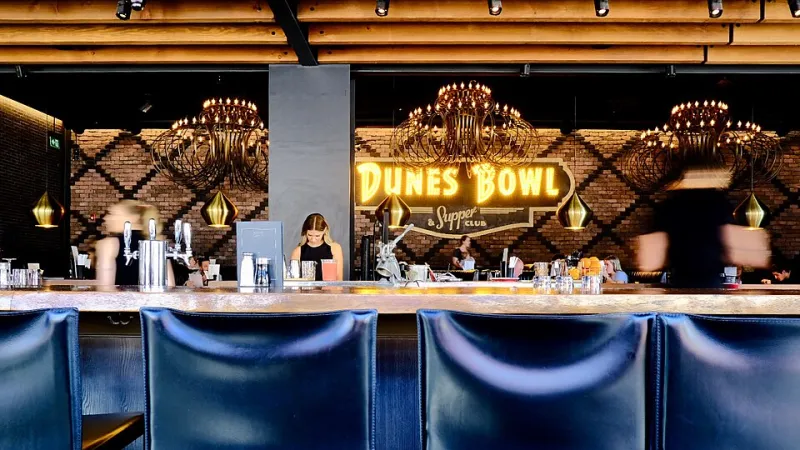
Photo: joanne clifford, CC BY 2.0, via Wikimedia Commons
Every spring, hospitality managers across the United States face a familiar pressure: Memorial Day weekend is approaching, reservation books are filling up, and a fresh wave of seasonal employees is about to walk through the back door. Outfitting that wave—quickly, professionally, and without exhausting the budget—is one of the most underestimated operational challenges in the service industry.
Summer seasonality does not simply mean more bodies on the floor. It means compressed onboarding timelines, higher rates of employee turnover, and an unforgiving public-facing standard that guests expect regardless of whether a server has been with you for three years or three days. Uniforms sit at the center of all of it.
Why Summer Is a Different Animal
The math is straightforward: a resort property that operates with 40 front-of-house staff in February may need to outfit 90 by July Fourth weekend. A beachside restaurant group might double its staff across multiple locations in under six weeks. That kind of scaling creates pressure at every point in the supply chain—from initial order placement to on-site distribution.
What makes summer particularly demanding is the combination of speed and uncertainty. Managers rarely know their exact headcount until late in the hiring cycle, which makes ordering uniforms feel like placing a bet rather than executing a plan. Order too few and you are scrambling mid-season. Order too many and you are sitting on unused inventory at Labor Day.
Understanding this tension is the first step toward managing it effectively.
Rental Versus Purchase: Making the Right Call
One of the first decisions a manager must make is whether to rent or purchase uniforms for seasonal staff. Both approaches carry legitimate advantages depending on the size and structure of your operation.
Rental programs offer flexibility. They eliminate the need to store, launder, or track individual garments at scale, and they reduce the financial risk of ordering for a headcount that might not fully materialize. For large hotel groups or multi-location restaurant chains with established vendor relationships, rental can be an efficient solution for high-churn roles such as bussers, banquet servers, or event staff.
Purchasing uniforms outright, however, tends to produce stronger results for brand consistency. When your team wears the same cut, color, and embroidery across every shift, the guest experience reflects that cohesion. Purchased uniforms also allow for customization—embroidered logos, name tags, and color-coded role designations—that rental inventories rarely accommodate at the individual level.
For most independent restaurants and boutique hospitality properties, a hybrid model works well: maintain a purchased core uniform for permanent staff and supplement with a simplified, standardized piece (such as a branded apron or polo shirt) for seasonal employees. This approach controls costs while preserving visual brand integrity on the floor.
Bulk Ordering: Timing and Tactics
If you intend to purchase uniforms for summer staff, timing your bulk order is critical. Supply chain lead times—particularly for embroidered or customized garments—can run anywhere from two to six weeks depending on the vendor and order volume. Managers who wait until May to place a Memorial Day order frequently find themselves in an uncomfortable position.
A reliable rule of thumb: place your summer bulk order no later than the first week of April. This window provides adequate time for production, shipping, and any corrections without cutting into your onboarding schedule.
When placing bulk orders, consider the following tactics to maximize value:
- Order in standardized size runs. Rather than ordering to exact individual measurements (which you may not yet have), order across a predictable size distribution—typically weighted toward medium and large for mixed-gender hospitality roles. This gives you inventory flexibility when new hires arrive.
- Negotiate per-unit pricing at volume thresholds. Many uniform suppliers, including tandtuniforms.com, offer tiered pricing that rewards larger orders. Even if you do not need every piece immediately, ordering at a higher threshold can reduce your per-unit cost significantly.
- Build in a buffer. Assume a percentage of your seasonal staff will require replacements due to damage, loss, or sizing adjustments. A buffer of 10 to 15 percent of your total order quantity is a reasonable starting point for most operations.
Maintaining Brand Consistency at Scale
One of the most common mistakes managers make during rapid summer scaling is allowing brand standards to erode under the pressure of speed. When uniforms are sourced inconsistently—different shades of black, mismatched apron styles, embroidery that varies between orders—the cumulative effect on guest perception is measurable even if no single guest can articulate exactly what feels off.
The solution is documentation. Before your summer hiring cycle begins, establish a written uniform specification sheet that details approved garment styles, colors, embroidery specifications, and any accessories such as hats, ties, or name badges. Share this document with every vendor you work with and require that all orders reference it explicitly.
For multi-location operations, assign a single point of contact at each property who is responsible for uniform compliance. This individual should conduct a visual check during the first week of every new hire's employment and flag any deviations before they become entrenched habits.
Planning for the Off-Season Exit
A well-managed summer uniform program does not end when Labor Day arrives—it transitions. At the close of the season, collect and audit all uniforms issued to departing seasonal employees. Garments in good condition should be laundered, cataloged, and stored for the following year. Damaged or heavily worn pieces should be retired.
This end-of-season audit serves two purposes: it reduces your ordering volume for the following summer (since you are working from an existing inventory base), and it gives you accurate data on which sizes, styles, and quantities experienced the most attrition. That data becomes the foundation for a smarter bulk order the following spring.
Summer staffing will always carry an element of unpredictability. But with a deliberate uniform strategy in place before the season begins, hospitality managers can scale their teams quickly, present a consistent brand face to every guest, and avoid the costly last-minute scrambles that define so many peak-season operations. The work happens in the off-season. The payoff shows up on the floor.