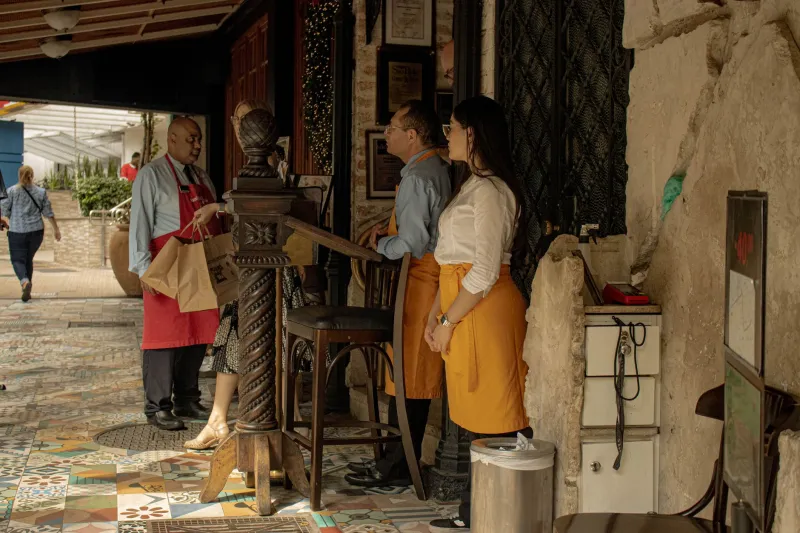
When Employees Start Tailoring Their Own Rules: Understanding the Rise of Unofficial Uniform Modifications
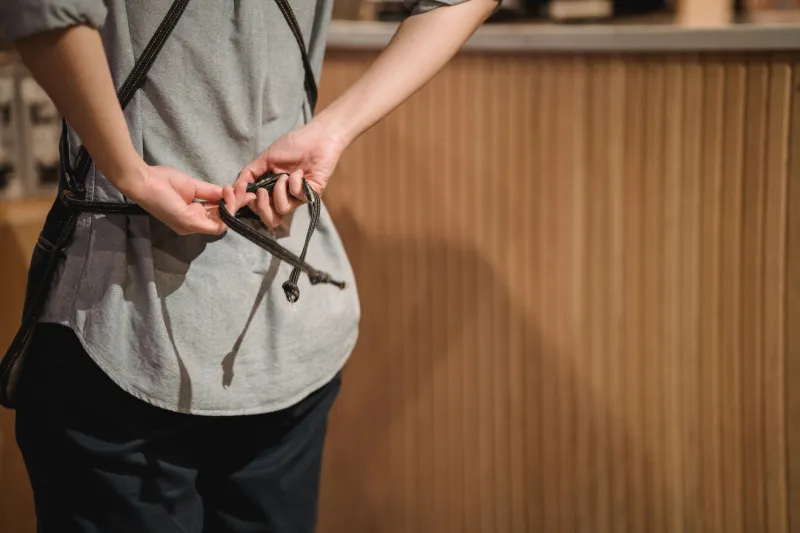
The Patch on the Sleeve No One Authorized
It starts small. A server tucks a hand-embroidered pin onto her apron. A hotel bellhop rolls his cuffs in a way that, technically, violates the property's dress standards. A line cook shows up with a bandana knotted at the collar that matches nothing in the approved uniform kit. Individually, these moments seem minor. Collectively, they signal something a manager cannot afford to ignore.
When employees begin modifying their workwear without permission, it is rarely an act of defiance. More often, it is a form of communication — one that speaks to unmet needs around identity, comfort, and belonging. For managers in hospitality and food service environments, learning to read that signal accurately is the first step toward a more resilient, engaged workforce.
Why Workers Personalize in the First Place
Uniform policies exist for legitimate reasons: brand consistency, hygiene standards, customer recognition, and professional presentation. But employees experience uniforms differently than the managers who design them. For a worker who spends eight to ten hours in the same garments, a uniform is not merely a brand asset — it is a second skin.
Research on workplace psychology consistently shows that individuals who feel stripped of personal expression in their professional environment are more likely to experience disengagement. In industries with already high turnover rates — hospitality chief among them — that disengagement can translate directly into attrition. When a worker adds a small personal flourish to an otherwise standardized outfit, she is often attempting to reclaim a measure of ownership over her professional identity.
For younger workers in particular, this impulse is especially pronounced. Employees who entered the workforce during or after the pandemic tend to place a higher premium on authenticity and self-expression in workplace environments. A uniform that feels entirely impersonal can register, for this demographic, as a signal that the employer views them as interchangeable — a perception that accelerates departure.
What Unofficial Modifications Are Actually Telling You
Before responding to unauthorized uniform changes, managers should consider what category of modification they are observing. Not all alterations carry the same meaning.
Fit-related modifications — hemming pants, adjusting sleeves, or altering silhouettes — often indicate that the official uniform inventory does not accommodate the actual range of body types on staff. This is a sizing and procurement problem, not a discipline problem. Addressing it requires a conversation with your uniform supplier about inclusive sizing options, not a memo to the offending employee.
Expressive additions — pins, patches, custom embroidery, or accessories that introduce personal style — suggest an employee who is engaged enough to invest in their appearance at work, but who lacks a sanctioned outlet for that energy. This is arguably the most constructive form of modification, and the most amenable to a structured response.
Comfort-driven alterations — removing a tie, substituting non-slip footwear that differs from the approved style, or wearing underlayers not specified in the uniform guide — frequently point to ergonomic shortcomings in the original uniform design. These modifications deserve evaluation on their merits before they are categorized as violations.
The Manager's First Move: Curiosity Before Correction
The instinct to issue a correction the moment a uniform deviation is spotted is understandable, but not always productive. A more measured first response involves asking a simple question: Why did this employee feel the need to make this change?
In many cases, the answer will reveal a gap in your current uniform program — a gap that, if left unaddressed, will manifest again with the next hire, and the one after that. Treating the modification as a symptom rather than the problem itself opens the door to systemic improvements that benefit the entire team.
This does not mean standards should be abandoned. Clear, consistently enforced uniform policies remain essential in customer-facing environments. The goal is not to negotiate away those standards, but to understand what is driving employees away from them.
Building a Sanctioned Customization Framework
The most effective long-term response to unofficial uniform modifications is not stricter enforcement — it is the creation of a structured customization program that channels employee creativity within professionally acceptable boundaries.
Such a program might include:
- Designated personalization zones: Specify where employees may add approved accessories, such as a single pin on the left lapel or a name badge holder of their choice.
- Approved embellishment options: Partner with your uniform supplier to offer optional embroidery upgrades — a staff member's name in a complementary thread color, for instance — that reinforce brand identity while acknowledging individuality.
- Seasonal or role-based variations: Allow for minor seasonal adjustments or role-specific styling differences that give employees a sense of agency without fragmenting the overall brand presentation.
- Fit consultation access: Ensure that all new hires have access to proper sizing guidance, and revisit uniform inventories annually to confirm they reflect the actual demographics of your workforce.
The key is to make the sanctioned options genuinely appealing. If the official customization program feels perfunctory — a checkbox exercise designed to placate rather than accommodate — employees will continue seeking solutions outside it.
Where the Line Must Hold
Employee autonomy in workwear has real limits, and those limits exist for good reason. In food service environments, health and safety codes govern what may and may not be worn during service. In healthcare-adjacent hospitality settings, such as hotel spas or institutional food service operations, additional hygiene standards apply. No customization framework should compromise compliance with these requirements.
Beyond regulatory concerns, brand integrity demands consistency in customer-facing presentation. A dining room where every server has interpreted the uniform differently is not a display of creativity — it is a presentation of disorder. The goal of any customization program is to create variation within a coherent visual identity, not to dissolve that identity altogether.
Managers should communicate these boundaries clearly and explain the reasoning behind them. Employees who understand why a rule exists are far more likely to respect it than those who are simply told to comply.
A Reflection of Culture, Not Just Compliance
How a workplace responds to unauthorized uniform modifications reveals a great deal about the underlying culture of that organization. A reflexive crackdown signals that conformity is valued over engagement. A thoughtful, structured response — one that acknowledges the impulse behind the modification while redirecting it constructively — signals something far more valuable: that the organization sees its employees as individuals worth retaining.
In an industry where the cost of turnover is measurable and significant, that signal may be worth more than any uniform policy memo ever written. The employees who care enough to personalize their workwear are, in many cases, the same employees who care most about the quality of their work. Keeping them — and keeping them looking sharp — begins with listening to what their alterations are trying to say.