No Aprons Required: What Happens When Restaurants Stop Dressing Their Staff Altogether
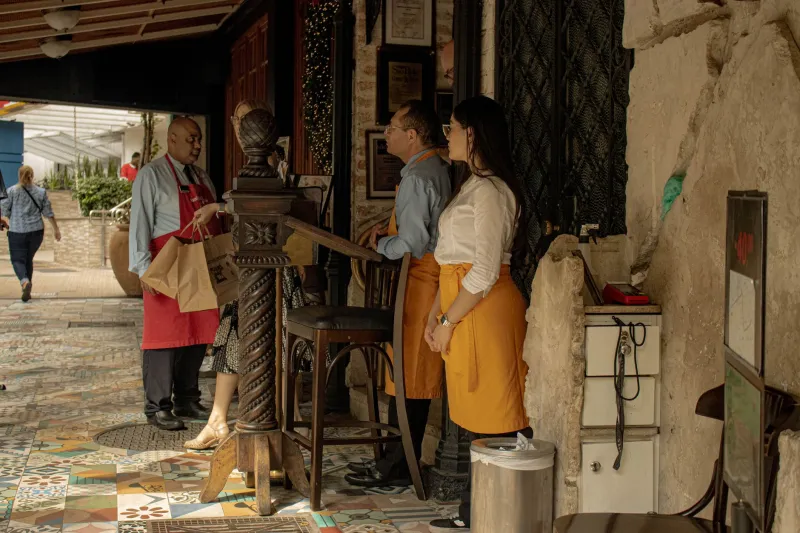
For decades, the restaurant floor operated according to a simple visual grammar. Guests wore what they chose. Staff wore what they were told. The distinction was clear, deliberate, and largely unquestioned. Today, that grammar is being rewritten—sometimes reluctantly, sometimes enthusiastically—by operators across the country who have decided that the traditional uniform may be doing more harm than good.
The movement is not fringe. From fast-casual concepts in Austin to white-tablecloth establishments in New York and Chicago, a measurable segment of American restaurateurs is experimenting with dress-code elimination, staff style guides, or loose personal-expression frameworks that bear little resemblance to the buttoned-down uniform programs of previous generations. The outcomes are instructive, whether you find them encouraging or deeply cautionary.
What Is Actually Driving the Shift
Labor pressure is the most frequently cited catalyst, and it would be dishonest to minimize its role. When applicant pools shrank dramatically during and after the pandemic, operators began auditing every policy that might be discouraging candidates. Uniform requirements—particularly those involving out-of-pocket costs, rigid sizing constraints, or garments perceived as demeaning—ranked consistently among the top five complaints surfacing in exit interviews and candidate feedback.
But characterizing this trend as purely reactive misses a more deliberate philosophical shift happening in parallel. A subset of operators, particularly those building concepts around authenticity and local community identity, began asking a harder question: does a standardized uniform actually serve our brand, or does it serve our anxiety about control?
For some, the honest answer was the latter.
The Case Being Made by Operators Who Have Made the Leap
Restaurant owners who have moved away from formal uniform programs often describe the same sequence of events. Initial anxiety. A trial period. Unexpected staff energy. And then, somewhat to their own surprise, neutral or positive guest response.
The reasoning they offer is consistent. When staff members dress in clothing that reflects their own identity—within reasonable guidelines around cleanliness, modesty, and safety—they carry themselves differently. The performance quality that uniforms are supposed to inspire, these operators argue, can actually be undermined when the garment feels like a costume rather than a professional tool.
There is also a recruitment dimension that cannot be dismissed. In markets where competition for experienced front-of-house talent is fierce, the signal that a workplace trusts its employees to present themselves professionally without dictating every detail has become a genuine differentiator. Several operators report that explicitly mentioning their relaxed dress policy in job postings measurably increased application rates among experienced candidates.
What the Skeptics Are Watching
Not everyone is persuaded, and the concerns raised by traditionalists deserve serious consideration rather than dismissal.
The most substantive objection is operational consistency. Uniforms solve a problem that becomes visible only when it disappears: they eliminate daily judgment calls about whether a particular staff member's personal style is appropriate for the environment. When those calls must be made on an individual basis, managers report that enforcement becomes fraught with subjectivity, potential bias, and interpersonal tension.
There is also the guest-recognition issue. In a busy dining room, the ability to identify staff instantly is a functional hospitality tool, not merely an aesthetic preference. Operators who have loosened dress requirements frequently acknowledge that they have had to compensate through other visual cues—specific aprons, branded pins, or color guidelines—to preserve that legibility. In other words, the uniform did not disappear so much as it transformed.
Finally, brand coherence is a genuine concern for multi-unit operators. A single-location independent concept can absorb the variability of personal expression without significant brand dilution. A regional chain with thirty locations cannot afford the same latitude without risking meaningful inconsistency in how guests experience the brand across different markets.
The Middle Ground Most Operators Are Actually Landing On
Pure dress-code elimination is rarer than the headlines suggest. What is far more common—and arguably more sustainable—is a thoughtful recalibration of what uniform requirements actually need to accomplish.
Many operators are retaining branded anchor pieces: a custom apron, a specific hat, a logoed outer layer that establishes visual identity without dictating the full outfit underneath. This hybrid approach preserves guest recognition and brand consistency while granting staff meaningful latitude in how they present themselves. It is not the absence of a uniform program; it is a more intelligent one.
This is precisely the territory where a well-considered workwear strategy adds the most value. The goal was never rigidity for its own sake. The goal was a workforce that looks cohesive, feels respected, and projects the brand promise your guests came to experience. Those outcomes can be achieved through multiple configurations, and the operators finding the most success are the ones willing to interrogate which elements of their uniform program are load-bearing and which are merely inherited habit.
What This Means for Operators Still Deciding
If you are watching this trend and wondering whether it applies to your operation, the most useful exercise is not to ask whether you should eliminate your uniform program. It is to ask what your current program is actually accomplishing—and at what cost.
Are your current garments supporting recruitment, or creating friction in it? Are they reinforcing your brand identity, or simply signaling that a dress code exists? Are your staff members wearing their uniforms with evident pride, or treating them as an obligation to be minimized?
The answers to those questions will tell you far more than any industry trend can. Some operations will find that a rigorous, well-designed uniform program is indispensable to their brand and operational model. Others will discover that a lighter touch—strategically chosen branded pieces paired with reasonable personal-expression guidelines—serves them better. A smaller number will conclude that their concept genuinely benefits from near-total staff autonomy in dress.
All three conclusions can be correct, depending on the concept, the market, and the guests being served.
The Permanent Shift That Is Already Here
Regardless of where individual operators land on this question, one change appears durable: the assumption that a strict, top-down uniform program is the automatic default for any serious restaurant is no longer universally shared. That assumption is now a choice—one that deserves to be made deliberately, with clear reasoning and ongoing evaluation, rather than simply inherited from the generation of operators who came before.
The restaurants thriving in this environment, whether they have uniforms or not, share a common trait. They know exactly why they made the decision they made, and they have built their operational and brand strategy around that choice with intention.
That clarity, more than any particular garment or the absence of one, is what professional hospitality has always looked like at its best.